Mercedes-Benz GLC : Loading the vehicle / Notes on Tire and Loading Information placard
WARNING Risk of accident from overloaded tires
Overloaded tires may overheat and burst as a consequence. Overloaded tires can also impair the steering and handling characteristics and lead to brake failure.
 Observe the load rating
of the tires.
Observe the load rating
of the tires.
 The load rating must be
at least half the
permissible axle load of the vehicle.
The load rating must be
at least half the
permissible axle load of the vehicle.
 Never overload the tires
by exceeding
the maximum load.
Never overload the tires
by exceeding
the maximum load.
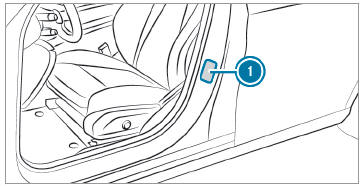
The Tire and Loading Information placard is on the B-pillar on the driver's side of the vehicle.
 Tire and Loading Information
placard
Tire and Loading Information
placard
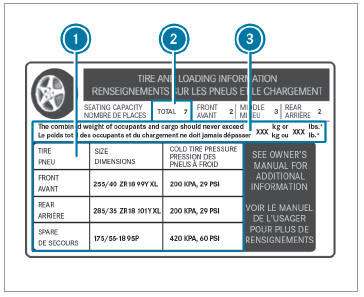
The data shown in the illustration is example data.
The Tire and Loading Information placard shows the following information:
- Maximum number of seats
 according to
the maximum number of people permitted to
travel in the vehicle.
according to
the maximum number of people permitted to
travel in the vehicle. - Maximum permissible load
 comprises the
gross weight of all vehicle occupants, load
and luggage.
comprises the
gross weight of all vehicle occupants, load
and luggage. - Recommended tire pressure
 for cold
tires. The recommended tire pressures are
valid for the maximum permissible load and
up to the maximum permissible vehicle
speed.
for cold
tires. The recommended tire pressures are
valid for the maximum permissible load and
up to the maximum permissible vehicle
speed.
Please also note:
- Information on permissible weights and loads on the vehicle identification plate.
- Information on tire pressure in the tire pressure table.
Further related subjects:
- Determining the maximum permissible load
- Notes on tire pressure.

 Steps for Determining Correct Load Limit
The following steps have been developed as
required of all manufacturers under Title 49, Code of U.S. Federal Regulations,
Part 575, pursuant
to the "National Traffic and Motor Vehicle
Safety Act of 1966"...
Other information:
Mercedes-Benz GLC 2016-2026 Owners Manual: Notes on regularly inspecting wheels and tires
WARNING Risk of injury through damaged tires Damaged tires can cause tire pressure loss. Check the tires regularly for signs of damage and replace any damaged tires immediately. WARNING Risk of hydroplaning due to insufficient tire tread Insufficient tire tread will result in reduced tire grip...
Mercedes-Benz GLC 2016-2026 Owners Manual: Function of the ASSYST PLUS service interval display
The ASSYST PLUS service interval display on the Instrument Display provides information on the remaining time or distance before the next service due date. You can hide this service display using the back button on the left-hand side of the steering wheel...
Categories
- Manuals Home
- Mercedes-Benz GLC Owners Manual
- Mercedes-Benz GLC Service Manual
- DSR (Downhill Speed Regulation)
- Folding the rear seat backrest forwards
- Using the 12 V socket
- New on site
- Most important about car
Fastening and adjusting seat belts
If the seat belt is pulled quickly or sharply, the seat belt retractor locks. The seat belt strap cannot be pulled out any further.